Orange in the October Sky: Monarchs Over North Louisiana
Garden Notes · 5 min read
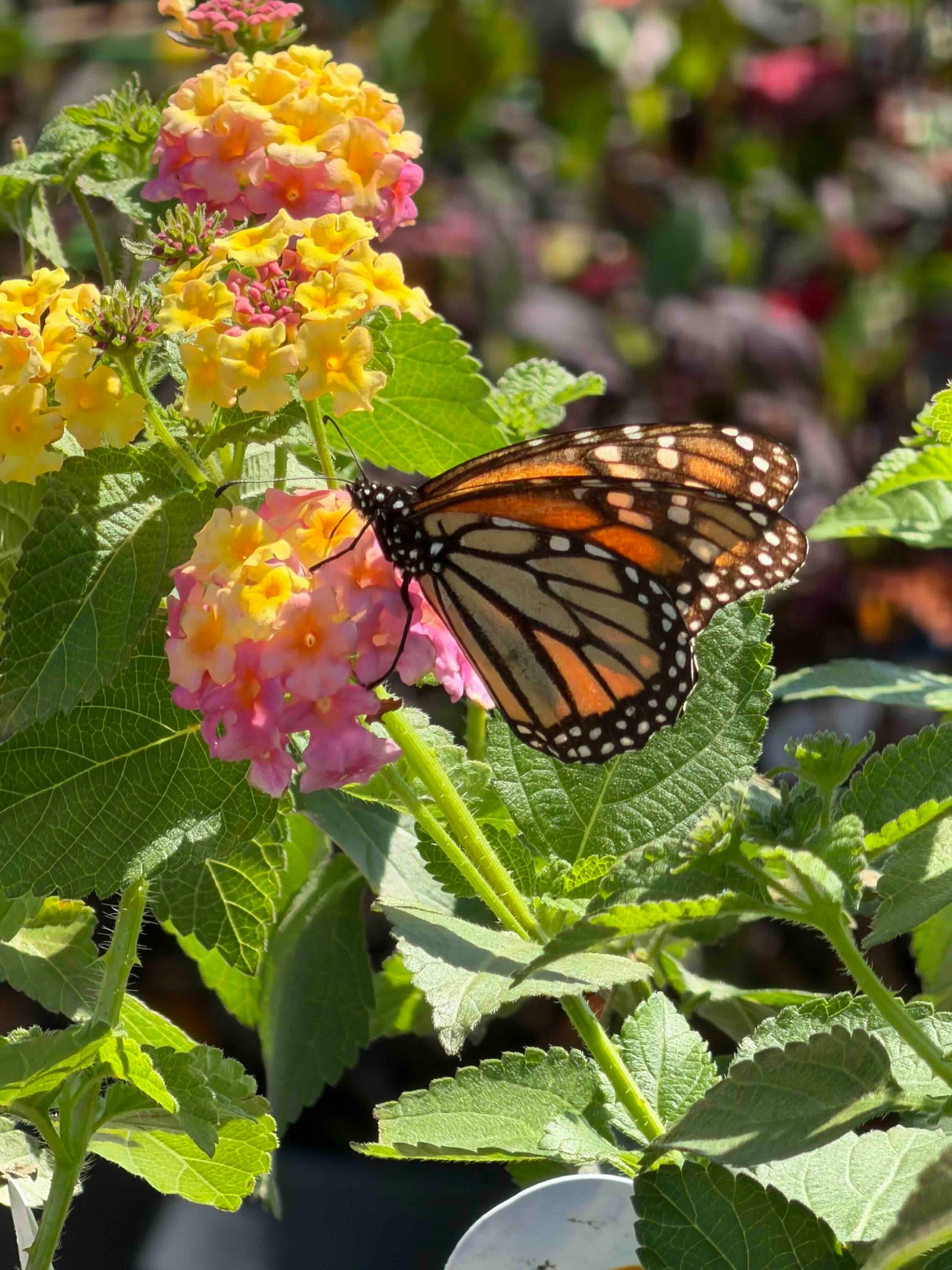
Every fall, if you look up at the right moment, you'll catch them — flickers of orange and black drifting south over the lake, over the cotton and bean fields, over the Mississippi River bottomlands. Monarch butterflies, on their way to Mexico. We're not just bystanders to that journey up here in Tensas Parish. We're a fuel stop on one of the longest migrations in the animal kingdom, and what we plant in our yards genuinely helps decide whether these travelers make it.
From the porch at Boone & Co.
We're on the Flyway
Monarchs east of the Rocky Mountains spend their summers up north — as far as Canada — then funnel south each fall toward a handful of mountain forests in central Mexico, where tens of millions of them spend the winter clustered in the fir trees. To get there, the eastern population pours down through the central states and squeezes through Texas and Louisiana before crossing the Gulf into northeastern Mexico.
That puts North Louisiana squarely in their path. Look for them moving south from late September through October, ahead of the cool fronts, often gliding on the north wind to save their energy. Come spring — generally late February into April — the survivors come back the other way, hunting for the first milkweed to lay their eggs on as they push north again. The remarkable part: no single butterfly makes the whole round trip. It takes several generations.
Four Generations and a Marathon Runner
A monarch's life moves through four stages, and the whole cycle runs about a month in our warm weather:
Egg — laid one at a time on the underside of a milkweed leaf, hatching in just a few days. Caterpillar — the famous yellow, black, and white-striped larva. It does nothing but eat milkweed, shedding its skin five times as it grows, for roughly two weeks. Chrysalis — a jewel of a thing, jade green flecked with gold, where the caterpillar remakes itself over about ten days to two weeks. Butterfly — emerges, dries its wings, and takes flight.
Most summer monarchs live only two to five weeks — just long enough to mate and start the next generation a little farther north. But the generation that hatches in late summer is different. These are the marathon runners. Born in a kind of holding pattern that delays them from breeding, they live up to eight or nine months, make the entire trip to Mexico, wait out the winter, and start the journey home in spring. The monarchs crossing your yard this October are the great-great-grandchildren of the ones that left last fall, yet somehow they know the way.
Milkweed Is the Whole Ballgame
Here's the thing every monarch gardener has to understand: a monarch caterpillar eats milkweed and nothing else. No milkweed, no monarchs — it's that simple. The plant's milky sap carries a toxin that the caterpillar stores up in its own body, which is what makes it taste so foul to birds. That bold striping is a warning sign. The good news is that Louisiana is milkweed country — we have more than twenty native species. For our part of the state, these are the ones worth asking for:
Green milkweed (Asclepias viridis) — also called green antelope-horn, this is one of the most common natives across Louisiana, happy in the sun along roadsides and field edges. A workhorse host plant. Butterfly weed (Asclepias tuberosa) — brilliant orange blooms, and it thrives in north, central, and west Louisiana. Drought-tough once established. Common milkweed (Asclepias syriaca) — does especially well up here in North Louisiana, more so than down on the coast. Swamp and aquatic milkweed (Asclepias incarnata and Asclepias perennis) — pink and white bloomers that love the wet feet of our river bottoms and low spots, but adapt well to garden beds and pots too.
A quick word on the tropical milkweed you'll see for sale most everywhere — the showy red-and-yellow one (Asclepias curassavica). It isn't native, and in our mild Gulf South winters it can cause real trouble: when it doesn't die back, it tempts monarchs to linger and breed instead of migrating, and it lets a nasty parasite build up on the leaves over time. If you already grow it, the fix is easy — cut it down to a few inches every fall so it can't undo the good you're trying to do. Better yet, lean on the natives above.
Setting the Table for the Travelers
Caterpillars eat milkweed, but the grown butterflies drink nectar — and a migrating monarch burning fuel toward Mexico needs all the calories it can get. The best yard offers blooms from spring clear through fall, with plenty going in September and October when the migrants come through hungry.
Late-season natives like goldenrod, ironweed, blazing star (Liatris), and asters are monarch magnets, and easy garden flowers like zinnias, lantana, pentas, salvia, and Mexican sunflower keep the buffet open. Plant in drifts rather than singles — a big patch of color is far easier for a passing butterfly to spot from the air.
Why It's Worth the Trouble
This isn't just a pretty hobby anymore. The eastern monarch population has fallen by around 80 percent, and in 2024 the U.S. Fish and Wildlife Service proposed listing the monarch as threatened under the Endangered Species Act. A yard full of milkweed and nectar flowers is one of the most direct things an ordinary person can do to help — and every plant counts when you sit on a flyway like ours.
We keep the garden center stocked for exactly this. Come see us for native milkweed and nectar plants suited to North Louisiana soil, and we'll help you pick what'll do well in your spot — sun or shade, wet ground or dry. Plant a little patch this season, and by next fall you may just have your own travelers stopping by on their way to Mexico.
Stop in at Boone & Co., 202 Newton Street, Saint Joseph. The garden center's ready when you are.